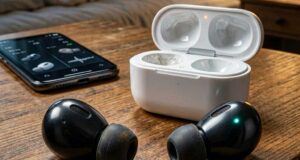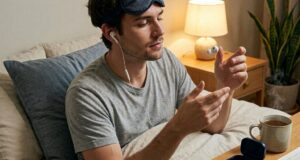
Finding the best sleep ear bud is a little different from choosing regular wireless earbuds. During the day, people usually care about sound quality, microphone performance, battery life, and strong noise cancellation. At night, comfort becomes just as important as everything else.
A pair of earbuds may have excellent active noise cancellation (ANC) but still be a poor choice for sleeping if the housing is too large or uncomfortable against a pillow. This is particularly important for side sleepers, who may have their ears pressed against a pillow for several hours.
Noise-cancelling earbuds can be useful for people dealing with traffic, household sounds, air-conditioning noise, or a snoring partner. Current sleep-earbud testing has found that newer purpose-built models combine low-profile designs with noise cancellation specifically aimed at nighttime use.
Why Use Noise Cancelling Earbuds for Sleep?
A noisy bedroom can make it difficult to fall asleep or stay asleep. Traffic outside the window, conversations in another room, a television, or a partner’s snoring can all become distractions.
Noise-cancelling earbuds attempt to reduce these sounds. Active noise cancellation uses microphones to detect surrounding sounds and creates an opposing signal to reduce certain types of noise.
ANC tends to work particularly well against continuous, low-frequency sounds. This can include engine noise, air conditioners, fans, and some types of background rumbling.
For sleeping, however, noise cancellation is only one part of the equation. The earbuds also need to remain comfortable for an extended period.
Comfort Is More Important Than Maximum ANC
When searching for the best sleep ear bud, it is tempting to compare products based on how much noise they cancel. But the strongest ANC is not very useful if the earbuds hurt after an hour.
Sleep earbuds should have a compact, low-profile shape. The less the earbud sticks out, the less likely it is to press against the pillow.
This is especially important for side sleepers. A large earbud housing can create a pressure point between the ear and pillow, making it difficult to remain comfortable.
Recent testing of dedicated sleep earbuds highlights this difference. Purpose-built models such as the Soundcore Sleep A30 are designed with a low-profile shape and multiple ear-tip and wing options to accommodate different ears.
Active Noise Cancellation vs. Noise Masking
These two technologies are sometimes confused, but they work differently.
Active noise cancellation uses microphones and electronic processing to reduce incoming environmental sounds.
Noise masking adds another sound, such as white noise or a steady background tone, to make unwanted sounds less noticeable.
For sleeping, both approaches can be useful.
ANC may be more helpful against steady low-frequency sounds, while masking can be useful for unpredictable noises or snoring. Some sleep-focused earbuds combine both approaches.
The Soundcore Sleep A30, for example, combines adaptive ANC with sleep-oriented features and snore masking. Testing has found its ANC particularly useful for lower-frequency sounds such as traffic, HVAC noise, and snoring.
Choosing Earbuds for Side Sleepers
Side sleepers need to pay particular attention to the physical design of earbuds.
A traditional pair of premium wireless earbuds may be comfortable while sitting at a desk but become uncomfortable when the head is resting on a pillow.
Look for:
- Low-profile housing
- Small outer components
- Lightweight construction
- Soft ear tips
- Secure ear wings if needed
- Several ear-tip sizes
- Minimal pressure when lying on your side
The fit should be secure without feeling tight. If an earbud constantly shifts during the night, you may end up adjusting it repeatedly and disturbing your sleep.
Battery Life Matters Overnight
Battery life is another important consideration.
A pair of earbuds that lasts only a few hours may be fine for commuting but less useful for overnight listening.
Check the expected battery life with ANC enabled because active noise cancellation can affect battery consumption. Manufacturer figures are usually based on particular testing conditions, so real-world performance may vary.
A charging case is also useful because it allows the earbuds to be recharged during the day.
For example, dedicated sleep-earbud testing has found that some current models can provide enough battery capacity for overnight use, although actual playback time depends on settings and features.
What About Sound Quality?
The best sleep ear bud does not necessarily need audiophile-level sound.
If your main purpose is sleeping, you may mostly listen to white noise, rain sounds, podcasts, audiobooks, or relaxing music. Clear voices and pleasant background audio may matter more than powerful bass.
You should also avoid using excessive volume to overcome background noise.
Noise cancellation can help reduce the temptation to turn the volume up. However, ANC should not be treated as a reason to listen at high volume for long periods.
Fit Is Different for Everyone
No single earbud fits every person perfectly.
The shape of your ear canal and outer ear can affect how comfortable an earbud feels. This is why having multiple ear-tip sizes is useful.
Try different sizes to find a seal that is secure without creating excessive pressure.
Some sleep earbuds also include ear wings or stabilizers. These can help keep the earbuds in place when you move during sleep.
The right fit can make a bigger difference than many technical specifications.
Can Noise Cancelling Earbuds Block Snoring?
Snoring can be particularly difficult to deal with because it is not always a constant sound.
Some modern sleep earbuds are specifically designed with snore masking or adaptive noise-control features. These technologies attempt to respond to changing nighttime sounds rather than simply providing standard ANC.
However, no earbuds can guarantee that all snoring will disappear.
Results can depend on the loudness and frequency of the snoring, the fit of the earbuds, and the particular noise-control technology being used.
Regular Earbuds or Sleep-Specific Earbuds?
If you only occasionally sleep with earbuds, a small pair of regular wireless earbuds may be sufficient.
However, people who wear earbuds every night may prefer a product specifically designed for sleeping.
Regular earbuds are generally built around daytime activities such as music, calls, commuting, and exercise. Sleep earbuds place greater emphasis on comfort, low-profile construction, and overnight use.
This difference becomes particularly noticeable for people who sleep on their side.
Safety Considerations
There are some important considerations when sleeping with earbuds.
The Cleveland Clinic notes that poorly fitting earbuds can irritate the ear canal, while prolonged exposure to loud audio can contribute to hearing problems. It also recommends keeping volume low, limiting listening time where possible, and keeping earbuds clean.
Noise cancellation can also make it harder to hear important sounds such as alarms, phone calls, or emergencies. For that reason, completely isolating yourself from your surroundings may not always be appropriate.
If possible, use a sleep timer so audio stops after you fall asleep. Keeping the volume around half or lower is another sensible precaution recommended by the Cleveland Clinic.
If earbuds cause pain, irritation, or other ear problems, stop using them.
For people who simply want relaxing sounds at bedtime, an external speaker beside the bed can be a safer and more comfortable alternative because it avoids placing anything inside the ear.