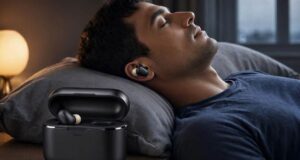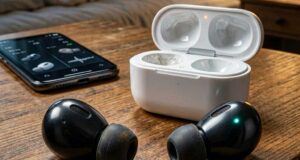
You lay your head down, turn onto your side, and settle into your mattress. Within minutes, a dull, radiating pressure builds up inside your ear. You adjust your head, flip the pillow, and try to find an angle where the plastic casing of your earbud isn’t digging directly into your temporal bone. By 4:00 AM, you wake up with an ear that feels bruised, throbbing, and completely inflamed.
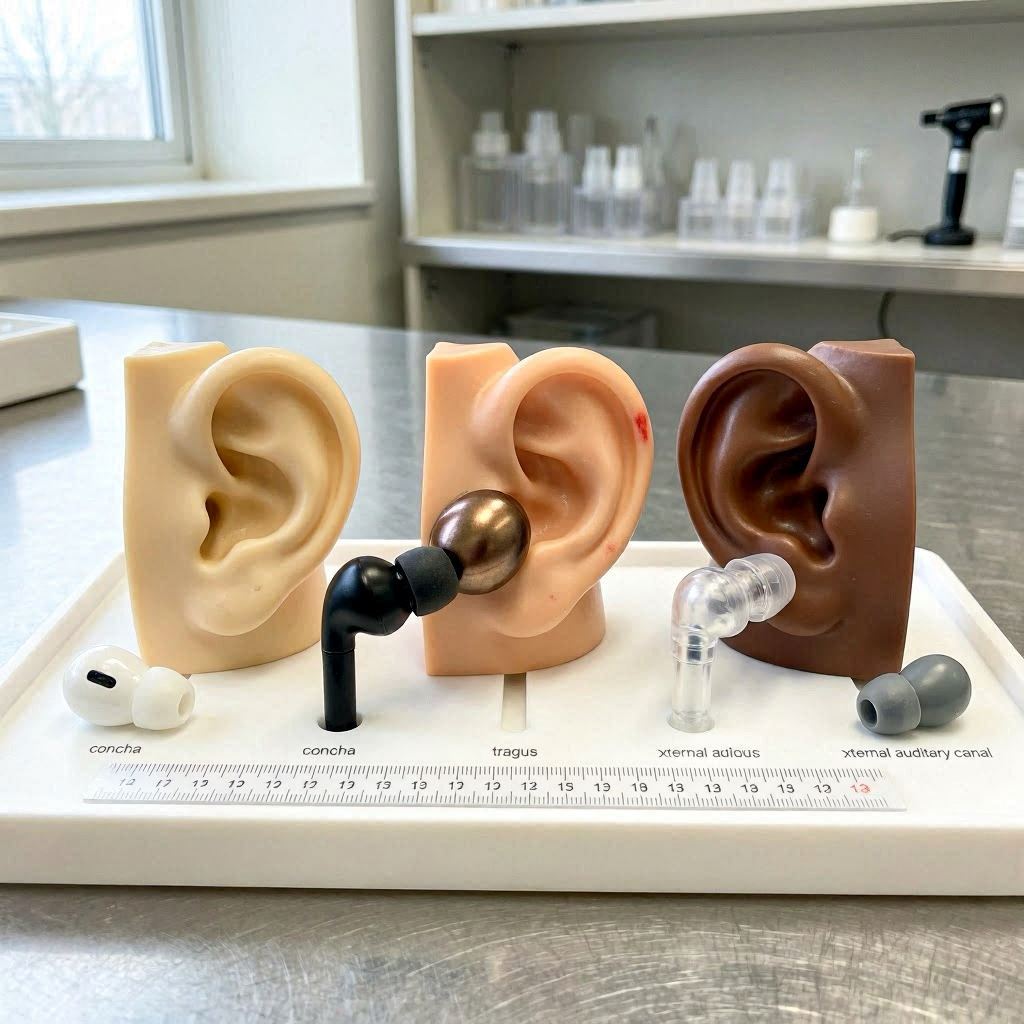
Even if you have researched extensively to buy the best sleep earbud on the market—featuring micro-enclosures and ultra-thin profiles—you are still fighting a losing battle against physics. When the weight of your head meets a dense pillow, the earbud becomes a mechanical wedge, turning your sleep routine into a source of physical stress.
Let’s skip the generic, repetitive AI-generated advice and break down the structural, mechanical, and architectural realities of pillow pressure, alongside 2026 tactical solutions to neutralize it.
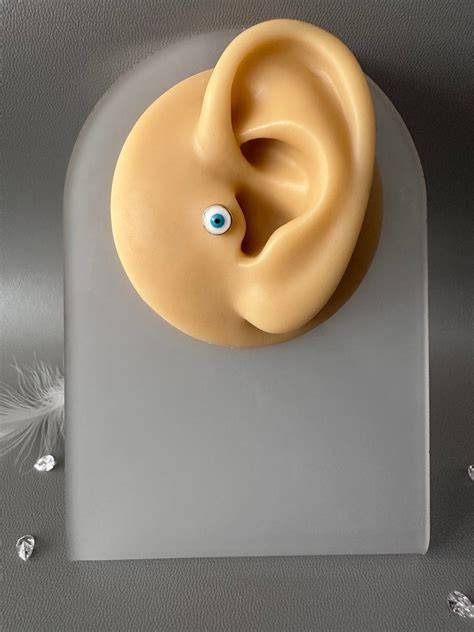
1. The Biomechanics of Pillow Pressure: What Is Actually Happening?
Pillow-induced ear pain isn’t just about a hard surface pressing against your skin. It is a complex biomechanical issue involving counter-force and structural depth:
- The Vector Force Concentration: When you lie on your side, the weight of your head (roughly 10 to 11 pounds) is concentrated onto the small surface area of your outer ear. If an earbud juts out even 2 millimeters past your tragus, that entire 10-pound force translates directly into a concentrated point-load, driving the earbud casing deep into your ear tissue.
- Cartilage Ischemia (Blood Flow Deprivation): Unlike your arm or leg, the cartilage in your ear (auricle) has no direct blood supply; it relies on nutrients from the overlying skin layer. Constant, unyielding pillow pressure squeezes these tiny skin capillaries flat. This micro-circulation stoppage leads to localized tissue ischemia, causing that deep, bruised, burning sensation by morning.
- The “Leverage Twist” Effect: Standard pillows do not distribute weight evenly across a curved earbud casing. As your head sinks into memory foam or down feathers, the pillow wraps around the earbud body, acting as a lever. Every time your head shifts slightly, the pillow twists the earbud inside the canal, causing microscopic friction burns on the delicate internal skin.
- Acoustic Vaulting & Jaw Alignment Changes: Pillow pressure actively forces the earbud deeper into your ear canal than the manufacturer ever intended. This over-insertion alters the acoustic chamber space, driving sound waves directly into your eardrum with no room for air escape, resulting in structural ear fatigue.
2. The 2026 High-Stakes Challenges of Chronic Ear Crushing
Ignoring nightly pillow pressure and pushing through the pain threshold creates serious physical and functional challenges:
| The Challenge | Why It’s Happening Now | The Long-Term Consequence |
| CNH (Chondrodermatitis) | Constant, repetitive mechanical pressure on the ear rim. | Highly painful, non-healing small nodules on the cartilage that require surgical excision. |
| Acoustic Seal Blowback | Pillow force breaking the dynamic air seal of the earbud tip. | Sudden drops in active noise isolation, allowing environmental sounds to wake you up. |
| Internal Component Fracture | Continuous lateral crush forces applied to ultra-thin sleep tech. | Cracked earbud casings, cracked solder joints, and battery failure. |
| TMJ Joint Aggravation | Lateral pressure shifting the alignment of your jaw joint at night. | Morning jaw stiffness, clicking sounds, and tension headaches. |
3. The Structural Shield: Engineering the Best Sleep Earbud for Pressure Relief
If you are a strict side-sleeper shopping for an upgrade, you cannot judge a device purely by its audio specifications. To survive severe pillow pressure, the best sleep earbud must meet highly specific structural standards:
[The Pressure-Resistant Sleep Earbud Anatomy]
 ├── Total Depth: Under 3.5mm (Must sit completely below the plane of the antihelix)
 ├── Housing Material: Shore 40A Durometer Liquid Silicone (Squishes under load)
 ├── Driver Position: Off-axis offset (Directs weight to soft flesh, not hard bone)
 └── Outer Surface: Concave indentation (Channels pillow force away from the core)
4. Point-to-Point Solutions to Eliminate Pillow Pressure Immediately
You do not need to give up your white noise or sleep podcasts. Instead, bypass the engineering flaws of your earbuds with these highly effective, direct physical adjustments:
A. Advanced Hardware Variations
- Transition to Liquid Silicone Rubber (LSR) Housings: Ditch any earbud that uses a hard polycarbonate or acrylic outer shell. Look for dedicated sleep models where the entire external body is cast in ultra-soft, flexible silicone. When your pillow pushes against it, the earbud housing flexes and deforms, absorbing the force instead of transferring it to your skull.
- Utilize Ultra-Low Profile Sleepbuds: Devices engineered exclusively for sleeping drop the traditional stem and bulk entirely, opting for a tiny coin-sized footprint that sinks completely into the natural hollow cavity of the ear bowl.
B. The Structural Pillow Hack (The Ultimate Defense)
- Deploy an Ear-Hole / Piercing Pillow: No matter how small an earbud is, a completely solid mattress pillow will always create some degree of counter-force. Switch your primary sleeping surface to an ergonomic ear-hole pillow (often called a CNH or piercing pillow). By positioning your head so your ear sits directly over the built-in physical cutout, you drop the physical pressure on your earbud down to zero, allowing you to sleep comfortably on your side all night.
- Adjust Down-Feather Distribution: If you are using a feather pillow, manually push the filling away from the center to create a localized nesting indentation for your ear before you lie down.
C. Tip Calibration
- Downsize Your Ear Tip Matrix: If you use medium tips during the day, switch to small, high-compliance memory foam tips at night. Because pillow pressure inherently shoves the earbud deeper into your ear canal, using a slightly smaller, more compressible tip prevents the earbud from stretching and scraping your internal ear tissue under load.
5. What Lies Ahead in Pressure Prevention
The future of bedtime audio lies in eliminating structural depth entirely. Engineering teams are currently prototyping flexible, film-thin piezo-electric transducers embedded directly into customized, soft-gel ear molds that run completely flat against the skin surface.
Until these customized biometric designs become mainstream consumer technology, managing the contact vectors of your side-sleeping posture, leveraging soft silicone materials, and adopting ear-cutout pillows remain your most effective defense lines against chronic ear fatigue.
The Bottom Line: The true test of the best sleep earbud is total structural transparency—you shouldn’t feel its physical presence when your head hits the bed. If your ear cartilage throbs, turns red, or feels hot to the touch for more than two consecutive mornings, your pillow and your earbud are working against your anatomy. Give your ears a full week of recovery to prevent permanent cartilage damage.