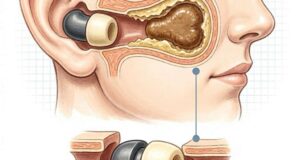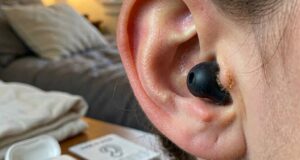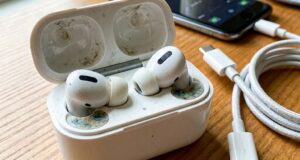
You buy a premium pair of headphones specifically marketed for sleep. You tune into a soothing rainfall track, drift off at 11:00 PM, and sleep soundly until 4:15 AM. Suddenly, a cold electronic voice hacks its way into your dream state: “Battery Low. Please Charge.” Your heart rate spikes, your sleep cycle is shattered, and you spend the rest of the night staring at the ceiling.
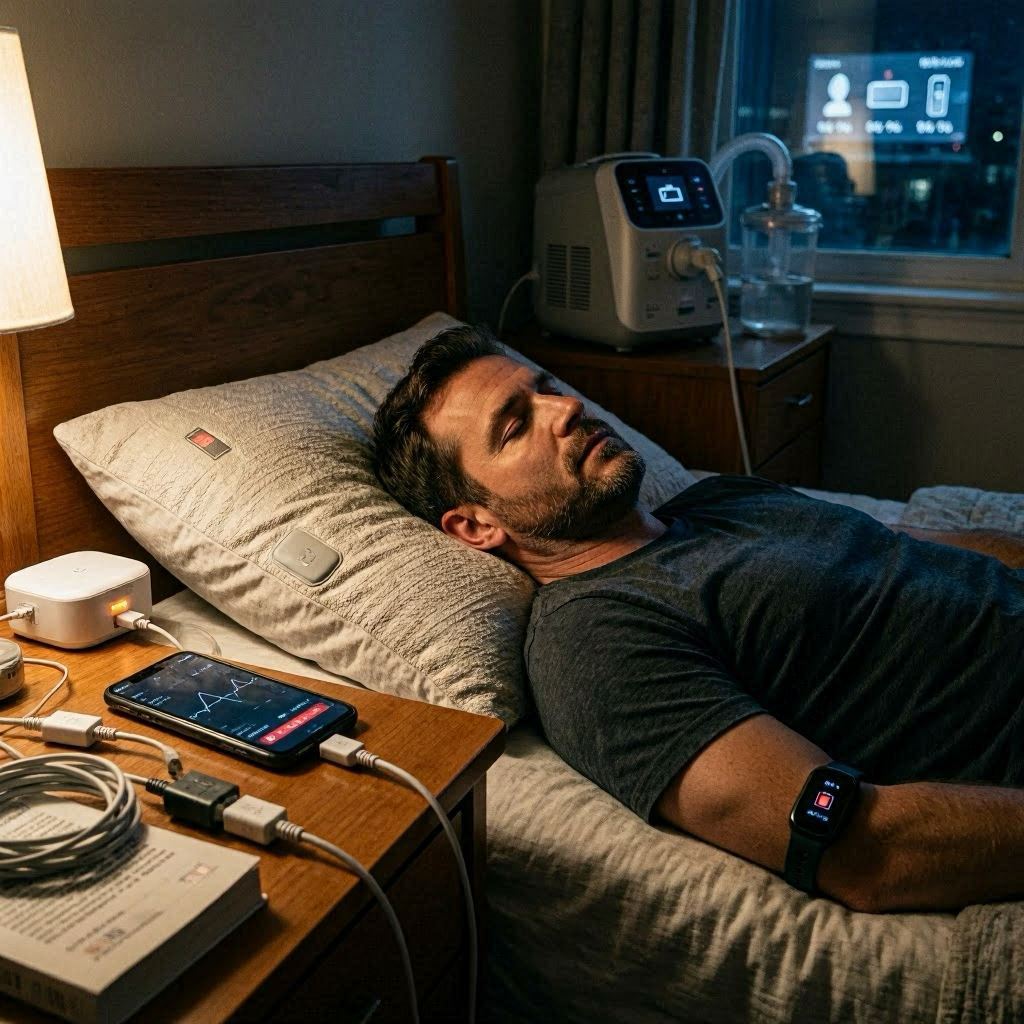
When searching for the best sleep earbud, consumers generally focus on physical comfort, profile thickness, and material flexibility. But the real structural bottleneck in 2026 isn’t ergonomics—it’s raw, unadulterated overnight runtime. A gym earbud only needs to survive a 90-minute workout; a sleep bud must maintain uninterrupted operation for a full 8-hour shift while fighting massive real-world variables.
The struggle to keep sleep buds alive from sunset to sunrise is a complex mix of hardware constraints, environmental friction, and hidden software taxes. Here is a point-to-point breakdown of the overnight battery drain crisis.
1. The Physical Math: Form Factor vs. 8-Hour Runtimes
The engineering blueprint behind the best sleep earbud design is inherently at war with electrochemical physics.
- The Volumetric Limit: To prevent a side-sleeper’s pillow from forcing plastic deep into their cartilage, the earbud housing must remain exceptionally flat and lightweight. This restricts the internal lithium-ion pouch to roughly 20mAh to 30mAh of total capacity.
- The Mathematical Deficit: A standard wireless earbud uses roughly 4 to 5 milliamperes (mA) of current per hour under basic conditions. If you multiply that consumption over an 8-hour sleep requirement, a tiny 25mAh battery is mathematically running on absolute fumes by hour six. There is zero margin for error.
2. The Heavy Processing Tax: Smart Noise Masking vs. Passive Audio
Older generations of sleep tech simply looped a basic static track cached on a primitive sound chip. Modern 2026 sleep architecture relies on heavy, real-time audio computation, which burns through power reserves at an alarming rate.
[Ambient Environment] ──► Partner Snores or Outside Traffic Spikes
                               │
                               ▼
[Onboard Microprocessor] ──► Actively analyzes frequency changes in real-time
                               │
                               ▼
[Dynamic Sound Wave Adjustment] ──► Driver scales up masking amplitude ──► Massive Battery Drain
- Adaptive Snore-Masking: Devices like the Soundcore Sleep A30 Special or Ozlo utilize internal microphones to monitor room acoustics all night long. When your partner shifts positions or snores louder, the internal processor immediately recalculates the output and dynamically alters the masking profile.
- The Continuous Loop Engine: This computational loop forces the chip to stay out of low-power “idle” states. Running active acoustic algorithms for 8 hours straight is the equivalent of running a miniature computer inside your ear canal all night long.
3. The Bluetooth Handshake and Radio Frequency Interruption
Streaming your favorite ambient sleep playlist directly from Spotify, Apple Music, or YouTube over a continuous 2.4GHz Bluetooth signal is a surefire way to induce a 4:00 AM shutdown.
- The Pillow Barrier: When your head is resting on a mattress, the physical mass of your skull, your brain tissue, and the dense foam of the pillow absorb radio frequency (RF) signals.
- Power Scaling: When the Bluetooth chip detects a dropped packet or a weakened signal from the smartphone on your nightstand, it automatically increases its transmission power (capping out its milliwatt output) to hold onto the connection. This sudden, hidden power scaling drains the battery significantly faster than when using the buds in an open room.
4. Chronic Thermal Degradation from Matress Ingress
Sustained warmth is the ultimate enemy of lithium-ion cell longevity. The environment of a bed acts as a natural thermal trap.
- Trapped Body Heat: Your ears radiate heat continuously throughout the night. When an earbud is tightly pressed between a side-sleeper’s body and an insulating memory foam pillow, the device easily reaches temperatures exceeding 35°C (95°F).
- Internal Resistance Spikes: Operating a micro-battery under constant thermal insulation increases its internal chemical resistance. This causes the battery management system (BMS) to miscalculate remaining voltage, often resulting in an early hardware shutdown even if some raw energy remains inside the cell. Over months of nightly use, this thermal exposure permanently drops the total battery health capacity.
5. Overnight Optimization Parameters
If you want to ensure your sleep hardware actually lasts until your morning alarm sounds, transition away from default configurations and implement these direct technical adjustments:
| Feature / Setting | High Overnight Consumption (Avoid) | Low-Power Optimization (Preferred) |
| Audio Source Mode | Continuous 8-Hour App Streaming | Native Local Storage / “Offline Mode” |
| Noise Cancellation | Max Full Active Noise Cancelling (ANC) | Smart Masking or Passive Seals Only |
| Biometric Features | Real-time Heart Rate & Movement On | Sleep Architecture Tracking Off |
| Playback Control | Infinite Loop Playback All Night | Sleep Timer Set to 90 or 120 Minutes |
Achieving a true, flawless overnight runtime is a balancing act that requires smart usage habits just as much as premium engineering. Until next-generation solid-state micro-batteries become cheap enough to integrate into consumer audio, the best sleep earbud models will always be limited by their tiny physical footprints.
To beat the 3 AM battery drain roadblock, protect your hardware by utilizing local storage sleep modes, disabling power-hungry biometric tracking sensors when they aren’t needed, and utilizing dedicated sleep timers that allow the hardware to enter a restful, low-power state once you have dropped into deep REM sleep.