You finish your nightly routine, grab your charging case from the nightstand, and pop the buds out—only to see a dead battery icon or a completely unlit LED indicator. Instead of slipping into a peaceful, sound-masked sleep, you are stuck dealing with tech support issues at 11:30 PM.
When people hunt for the best sleep earbud, they rigorously check the decibel-blocking ratings, the low-profile side-sleeper comfort, and the app’s white noise library. Almost no one checks the charging mechanics. Yet, “sleep earbuds not charging in case” has become one of the most widespread tech complaints of 2026.
Because sleep buds operate in a unique environment—exposed to bodily fluids, constant physical pressure, and micro-form factor limitations—their charging ecosystems fail far differently than standard gym or office headphones. Let’s break down exactly why this happens, the new design flaws causing it, and how to fix it point by point.
1. The Pogo-Pin Paradigm: Micro-Scale Physics Flaws
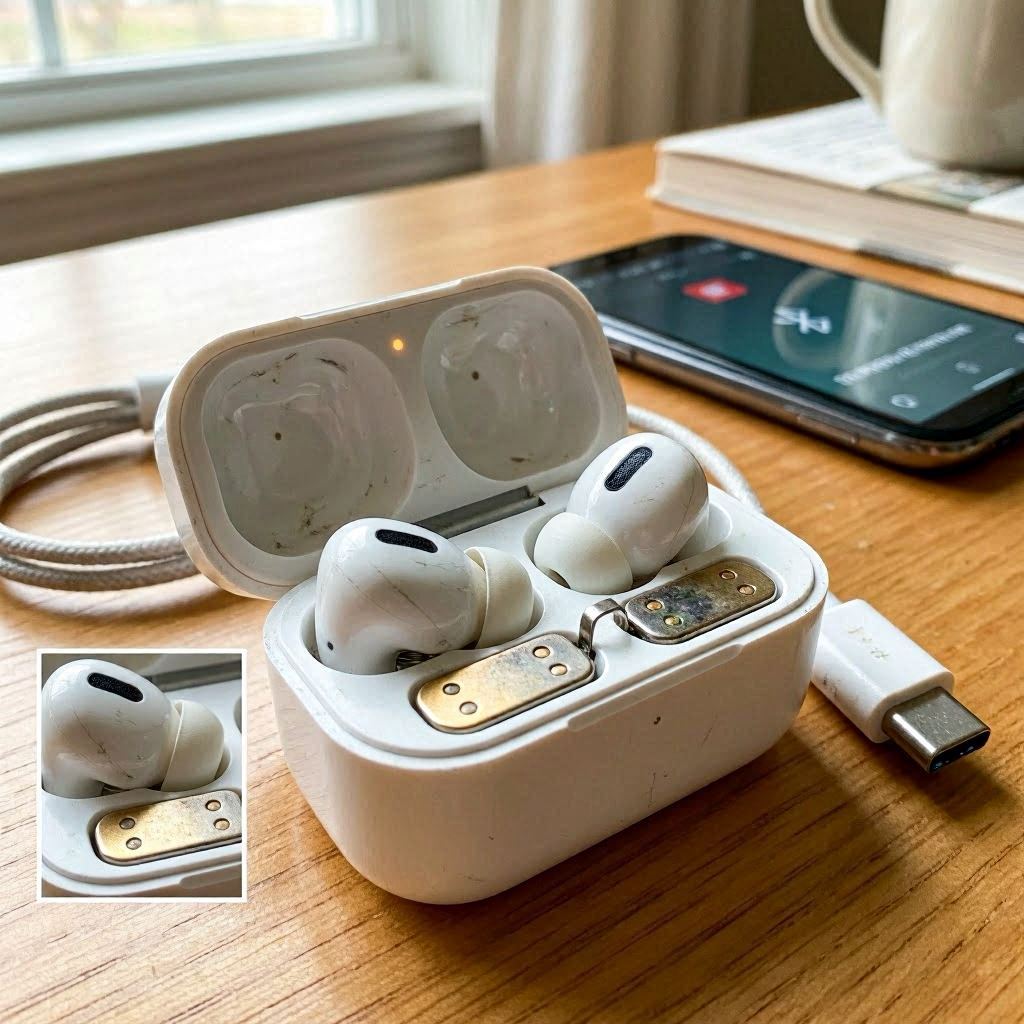
To keep sleep earbuds flush against your ear canal so they don’t stab your cartilage when you press into a pillow, manufacturers have to shrink everything. This includes the gold-plated charging contacts (pogo pins).
- The Tolerance Problem: Standard earbuds use deep, recessed wells with thick copper pins. Dedicated sleep buds use ultra-shallow micro-pins to keep the chassis thin. Because the physical contact area is less than a millimeter wide, even a fraction of a millimeter of misalignment means zero power transfer.
- The Spring Fatigue: The tiny springs inside the case that push the pins upward to meet the earbud are incredibly delicate. Over months of dropping the buds into the case, these micro-springs lose their tension. The earbud sits in its cradle, but the pin fails to make physical contact with the receiver plate.
2. The Nightly Environmental Tax: Sebum and Cerumen
We don’t sweat or produce oils at the gym the same way our bodies behave during 8 hours of deep sleep. Your ear canal is a highly active biological environment, and your charging case bears the brunt of it.
Raat bhar ka Pehnawa (8 Hours of Ear Canal Exposure)
       │
       ├──► Sebum (Skin Oils) & Cerumen (Earwax) build up on contact plates
       │
       └──► Dropped straight into the charging case without wiping
               │
               └──► Micro-thin insulating barrier forms over gold pins
                       │
                       └──► Case reads "False Full" or completely blocks current
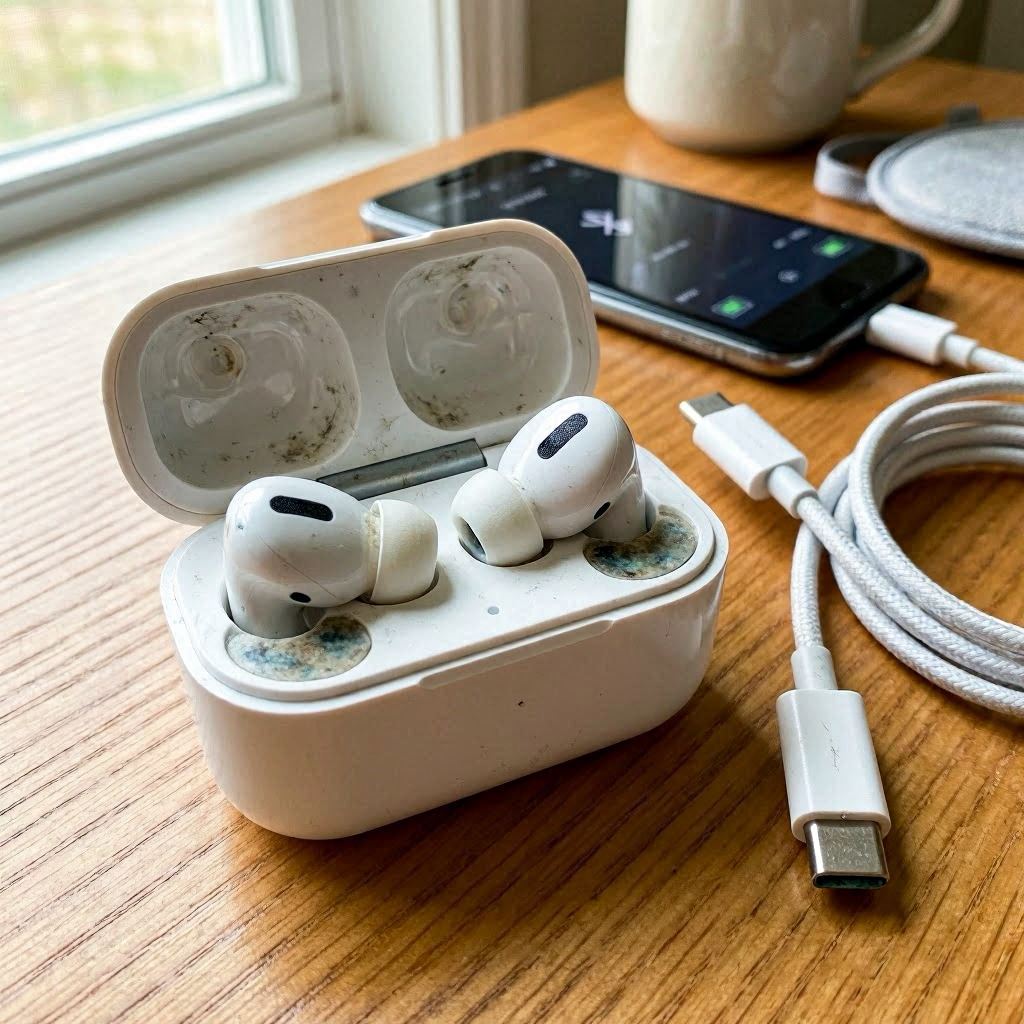
- The Insulating Film: While sleeping, your ears secrete sebum (natural oils) and cerumen (earwax). When you take the buds out in the morning and immediately drop them into the case, these oils transfer directly onto the gold contact plates.
- The Invisible Barrier: Over a few weeks, this oil bakes under the minor heat of charging, creating a micro-thin, hardened insulating barrier. The case might show a green light indicating it thinks a device is present, but no actual electrical current is passing through to the lithium-ion cell.
3. The 2026 Magnetic Weakness Dilemma
To make sleep buds easier to dock in the dark, manufacturers rely heavily on neodymium magnets to pull the earbud into the exact charging position. However, this design feature has introduced a new mechanical flaw.
Silicone Sleeve Creep
- To ensure the best sleep earbud fits every ear shape, brands ship them with interchangeable silicone eartips and stability fins.
- Over time, these soft silicone sleeves stretch, warp, or slightly shift out of place due to your ear’s heat and the pressure of side-sleeping.
- When you drop the bud into the case, the magnet clicks, making you think it’s docked properly. In reality, the warped silicone sleeve is acting as a microscopic wedge, lifting the earbud just enough to prevent the pogo pins from connecting.
The Thermal Expansion Trap
- Charging generates minor heat. Because sleep buds are enclosed in tightly sealed, airtight plastic housings to prevent sweat ingress, they struggle to dissipate this thermal energy.
- If the case gets too warm during a fast-charge cycle, the safety chip (Battery Management System) inside the earbud triggers an emergency thermal shutdown. The charging process stops midway through the night to protect the battery from swelling, leaving you with a half-dead bud by morning.
4. Troubleshooting Matrix: How to Force the Case to Charge
Before you file a warranty claim or throw your device away, walk through these direct diagnostic steps to isolate the issue:
| Symptoms | Likely Root Cause | Immediate Fix Action |
| Case blinks red or doesn’t acknowledge one earbud | Insulating oil film or oxidized contact plate | Clean pins with 99% Isopropyl alcohol & a sharp wooden toothpick |
| Earbud charges only when case lid is pressed down | Weak internal pogo springs or loose magnets | Place a tiny piece of cardboard/foam on the inside lid to force downward pressure when closed |
| One bud stays at 0% while the case is fully plugged in | Deep discharge sleep state / Dead BMS | Perform a hard hardware reset on the case while the buds are docked |
5. What to Look for in Your Next Purchase
If you are tired of dealing with delicate charging setups and are searching for the best sleep earbud that won’t leave you stranded with dead hardware, keep these engineering metrics in mind:
- Physical Lock Cradles: Avoid cases that rely only on magnets to align the charging pins. Look for cases with deep, molded physical plastic slots that force the earbud into a fixed position regardless of whether the silicone wingtip is twisted.
- Inductive/Wireless Charging Experiments: While still rare due to size limitations, some premium 2026 sleep tech prototypes are experimenting with pinless, near-field micro-wireless charging. Eliminating open copper plates completely solves the earwax corrosion crisis.
- External LED Status Verification: Ensure the device has independent charging lights for the left earbud, right earbud, and the case shell itself. A single generic power light won’t tell you if one side is failing to pull current.
A sleep earbud is only as good as its readiness when your head hits the pillow. The “not charging in case” issue is rarely a sign of a totally destroyed battery cell; it is almost always a breakdown in micro-connectivity caused by skin oils, shifted silicone sleeves, or fatigued case pins. By maintaining a strict cleaning ritual and ensuring a precise mechanical seat every morning, you can bypass these manufacturing limitations and protect your nightly quiet hours.