It’s 3:15 AM. You wake up to a sudden burst of ambient noise—your partner snoring, traffic outside, or just the eerie silence of the night. You reach for your ear, only to find it empty. One of your earbuds has vanished into the dark abyss of your bedsheets.
After a frustrating five-minute search under your pillows, you finally find it wedged near the headboard. Sound familiar?
The issue of sleep earbuds falling out is arguably more frustrating than them causing pain. You buy the best sleep earbud expecting an uninterrupted night of peaceful audio, but instead, you get a nightly scavenger hunt.
Let’s skip the generic, repetitive AI-generated tips (“just try a different size!”) and look at the real anatomical, chemical, and mechanical reasons why your buds won’t stay put, along with modern 2026 fixes to solve this once and for all.
1. The Anatomy of a Slip: Why Sleep Earbuds Eject Themselves
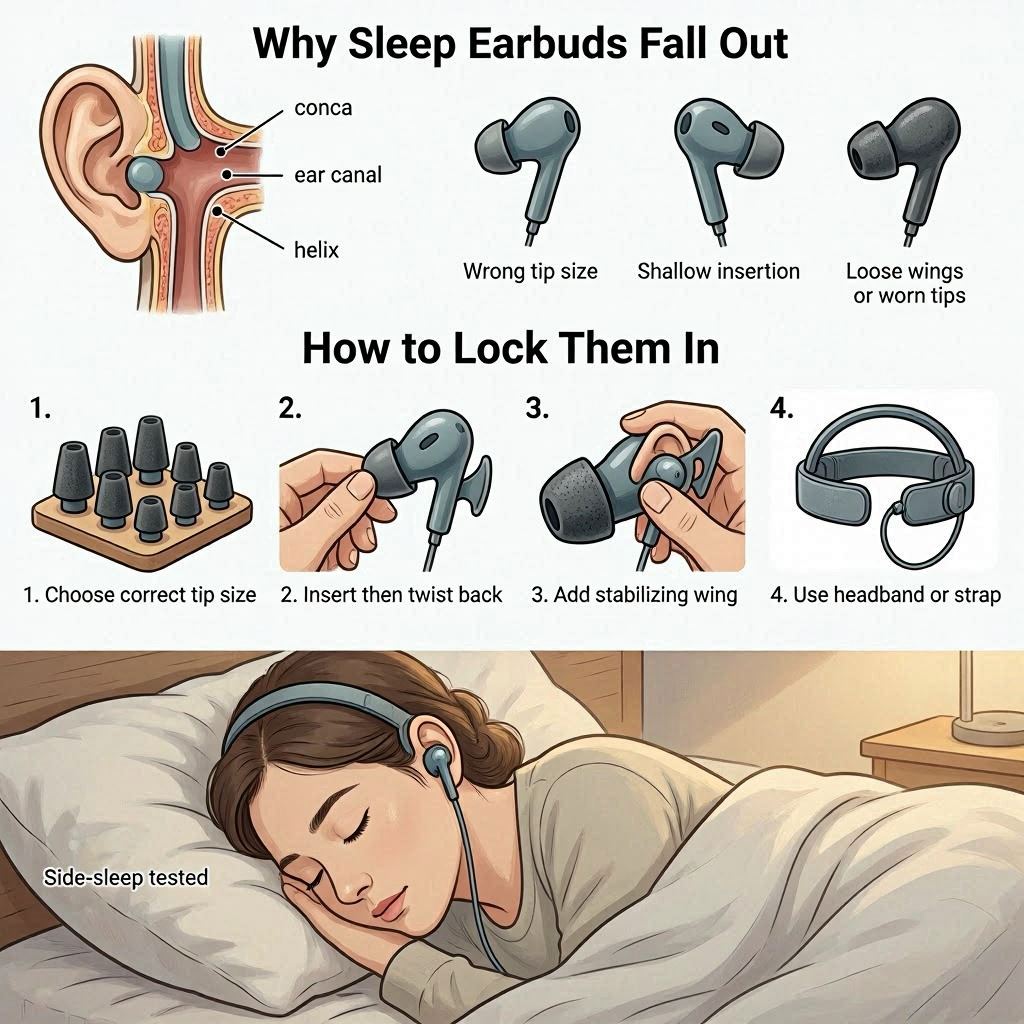
Your ears aren’t static holes; they are dynamic, self-cleaning, moving parts of your body. When you sleep, several hidden triggers force an earbud out of place:
- Jaw Movement & The Ear Canal Squeeze: When you drift into deep sleep, your jaw muscles completely relax. If you grind your teeth, swallow, or sleep with your mouth open, your jawbone physically compresses and alters the shape of your ear canal. This subtle, repetitive movement slowly pushes the earbud outward like a tube of toothpaste.
- The “Pillow-Leverage” Effect: As you toss and turn, your ear rubs against the pillow. If an earbud sticks out even a fraction of a millimeter past your outer ear (tragus), the friction of the pillowcase acts as a lever, gently gripping the bud and pulling it out as you roll over.
- Seabum & Sweat Lubrication: Your skin naturally secretes oils (sebum) and sweat, especially during the REM cycles when body temperature fluctuates. This microscopic layer of moisture turns your ear canal into a slip-and-slide, destroying the friction required to hold a silicone tip in place.
- Anti-Extrusion Reflex: The human ear is biologically designed to expel foreign objects. The tiny hairs inside your ear canal (cilia) move in a wave-like motion to push out dust and wax. A lightweight, loose earbud triggers this natural defense mechanism over an 8-hour period.
2. High-Stakes Challenges: The Hidden Costs of Lost Buds
Losing an earbud in bed isn’t just an annoyance; it creates unique practical and structural challenges:
| The Challenge | Why It’s a Problem | The Consequence / Risk |
|---|---|---|
| The Battery Drain Trap | The bud falls out but stays connected to your phone. | You wake up to a dead earbud that didn’t charge in its case. |
| Accidental Crushing | You roll over onto a loose, hard plastic earbud. | Internal component damage or a cracked casing. |
| The Pet Hazard | Small micro-buds fall onto the floor or bedside table. | High risk of pets chewing or swallowing expensive tech. |
| Sleep Fragmentation | Waking up briefly to realize the sound has stopped. | Destroys your deep sleep cycles, leaving you tired. |
3. The 2026 Fit Checklist: What Makes the Best Sleep Earbud Stay Put?
If your current pair keeps escaping into your blankets, it’s failing the mechanical requirements of sleep audio. The best sleep earbud must possess specific structural defenses against movement:
[The Anti-Slip Earbud Design Blueprint]
 ├── Zero-Projection Profile: Sits entirely sub-flush inside the ear concha bowl
 ├── Securing Mechanism: Flexible silicone wingtips or fins that lock under the ear ridge
 ├── High-Friction Exterior: Matte, textured coating rather than glossy, slippery plastic
 └── Weight Distribution: Heavy battery mass centered inward, not pulling outward
4. Point-to-Point Tactics to Lock Your Earbuds in All Night
If you aren’t ready to buy a new pair, you can hack your current setup using these highly effective, direct solutions:
A. Material & Hardware Upgrades
- Upgrade to Comply Memory Foam: Standard silicone tips expand back to their original shape too quickly, causing them to slip when your ear canal shifts. Memory foam tips expand slowly, creating a tight, customized seal that grips the skin texture of your ear canal.
- Add Third-Party Wingtips: If your earbud has a smooth body, look for universal silicone sleeves that feature a small hook or “wing.” This wing locks under the antihelix ridge of your ear, providing a secondary anchor point that jaw movements cannot dislodge.
B. Skin & Device Prep
- The Pre-Bed Alcohol Wipe: Before putting your earbuds in, use a cotton swab to gently clean the outer entrance of your ear canal to remove excess oils. Do the same for the earbud tips. Removing the oil barrier increases grip friction by up to 70%.
- The “Tug and Twist” Insertion: Don’t just push the bud straight in. Pull the top of your ear upward and backward with your opposite hand to open up the ear canal, insert the bud, twist it slightly backward to lock the fin, and let go of your ear.
C. Environmental Defenses
- Switch to a Silk or Satin Pillowcase: Traditional cotton pillowcases have a high rough-texture friction coefficient that grabs onto earbuds. Silk or satin pillowcases allow your ear and the earbud to glide smoothly across the surface without catching.
- Use a Anti-Loss App Trigger: Ensure your earbuds have a “Find My Buds” feature that can emit a high-pitched beep through the app, saving you from ripping your bedsheets apart every morning.
5. Future-Proofing Your Sleep Audio
The ultimate solution entering the market involves intelligent biometric mapping. True next-generation tech uses flexible, soft-liquid silicone housing that changes density based on body heat, softening where it touches sensitive cartilage but remaining firm at the core to maintain a tight seal.
Until these smart materials become standard, managing oil buildup, utilizing memory foam, and minimizing pillow friction are your best defenses against the midnight disappearing act.
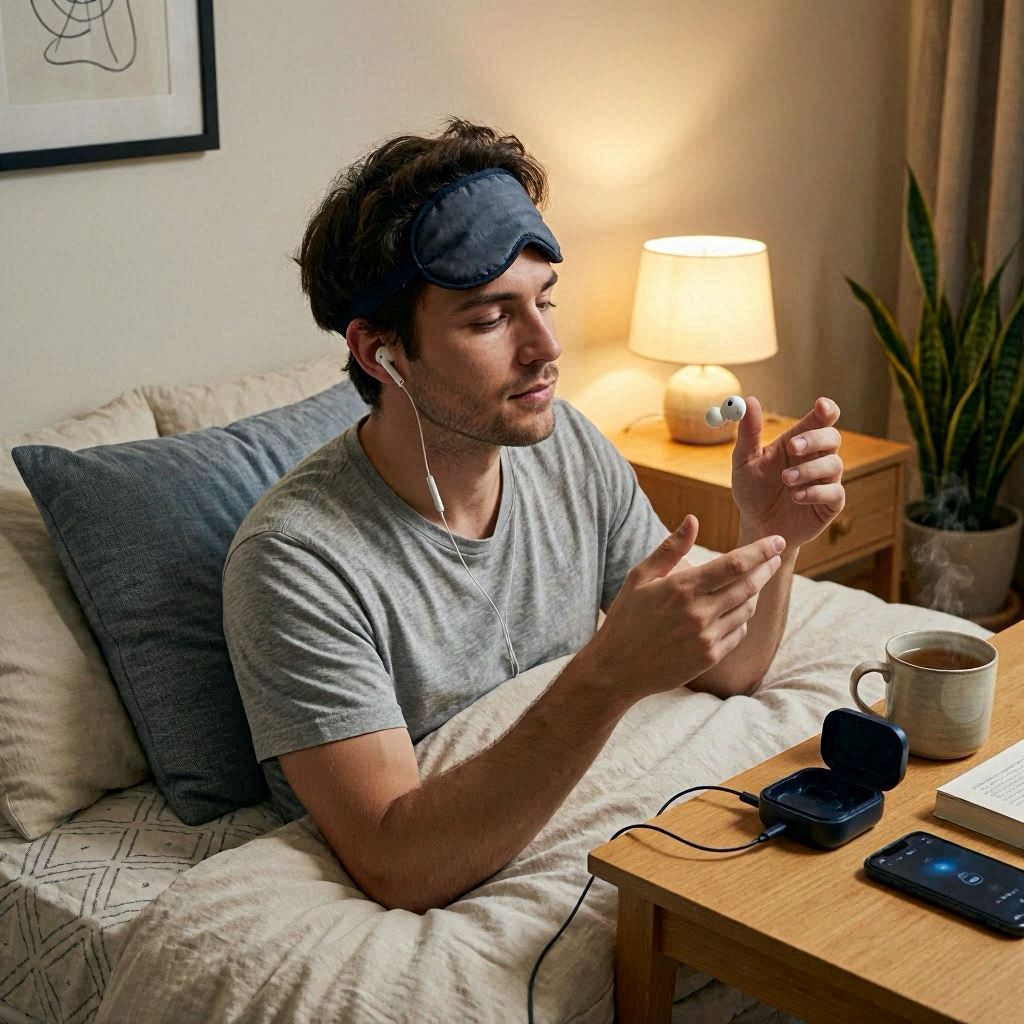
The Takeaway: Finding the best sleep earbud isn’t just about sound isolation; it’s an engineering battle against your own pillows and movement. If a pair continues to fall out after optimizing your tips and switching your pillowcase, the chassis shape is fundamentally incompatible with your ear’s unique anatomy.